There are 2 types of these scales: Major and Minor. Music composed in a
 Major key usually sounds 'happy', while we usually associate 'sad' with minor keys.
| Unit 3 - The Elements of Music | Notes and Staff | Scales and Key Signatures You are here |
Rhythms | Composing Music | Assignments |
Musical Scales and Key Signatures
Most western music of today is based on a combination of 7 notes that have been deemed to be pleasing to the ear.
There are 2 types of these scales: Major and Minor. Music composed in a Major key usually sounds 'happy', while we usually associate 'sad' with minor keys.
Major Scale
If you have ever heard the "do, re, mi" song from "The Sound of Music" you know this series of pitches or 'scale'. This sequence is a series of 2 whole steps, then a half step and then 3 whole steps and then another half step.

IF you start this series on the letter C, then this series (scale) happens to land on all white keys on the piano.
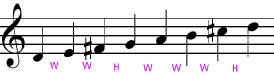 |
If you start this series on the letter D, you still maintain the sequence of whole and half steps, but now you will need to play some black keys on the keyboard (F# and C#, instead of F and C ). and C ). |
 |
If you start the series on the letter Eb, then you would need to play an Ab and Bb to maintain this sequence of whole and half steps. |
In the first example above (when you started on the letter C) you would be playing a C Major Scale.
In the second example (when you started on the letter D) you would be playing a D Major Scale.
In the third example (when starting on the pitch Eb) you would be playing in Eb major
If you were to play a song on the piano using only the white keys, you are playing only 'natural' notes (no flats  or sharps
 ). You are probably playing a song that is in the key of C Major.
Click here for a explanation of major scales: http://www.musictheory.net/lessons/21 (Click on the  in the bottom right to go through the lesson)
Minor Scales
There are 3 types of minor scales: natural, harmonic and melodic.
Most musicians actually use a combination of the last 2 types of minor scales in their compositions; they use the notes of the harmonic scale when the notes are ascending (getting higher) and the melodic scale when the notes are descending.
Click here for an explanation of minor scales: http://www.musictheory.net/lessons/22 (Click on the in the bottom right to go through the lesson)
Key Signatures
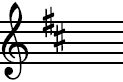 If you are playing a song in D Major, then you will usually play F# and C# instead of Fand C . Instead of placing the # before each and every F and C, composers started placing the accidentals (Flats and Sharps) at the beginning of the staff. This is known as a 'key signature'.
Here is a chart with all the key signatures:
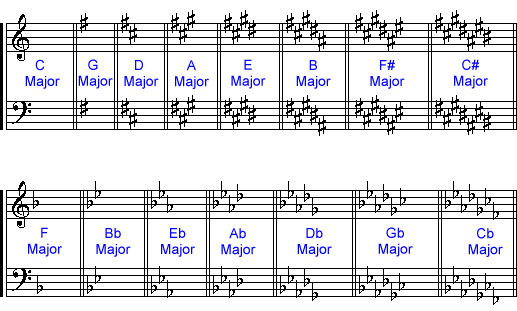 |
The rule for sharp keys: Find the last sharp (from the right) and the letter immediately above is the key. For example: If the last # is on the F line, then you are in the key of G. If the last # is in the C space, you are in the key of D. The rule for flat keys: |
Click here for explanation of key signatures: http://www.musictheory.net/lessons/24 (Click on the in the bottom right to go through the lesson)
| Scales and Key Signature Assignment: Identify Major or Minor Scales by sound and Key Signatures by sight. |